
This fits if
The situation matches
The bite or attack seemed sudden, but your cat had just seen, heard, smelled, or reacted to another trigger such as an outside cat, sound, visitor, or household conflict.
Site search
Cat behavior guide
A cat may become highly aroused by an outside cat, sound, smell, or conflict. If the trigger is unreachable, the response can shift toward the nearest person or animal.
Start by matching the situation
If the bite broke skin, handle the wound first. If not, check whether this sounds like your situation.
This fits if
The bite or attack seemed sudden, but your cat had just seen, heard, smelled, or reacted to another trigger such as an outside cat, sound, visitor, or household conflict.
Do first
Do not reach in, pick up, or corner the cat while arousal is high. Create distance and reduce stimulation first.
Then
Block the trigger when possible, separate animals safely, and wait for normal posture and routine before reintroducing contact.
Change course if
Use emergency or wound care first if someone is injured. Use the health route if the behavior is new, unexplained, repeated, or difficult to manage safely.
Outside-cat trigger
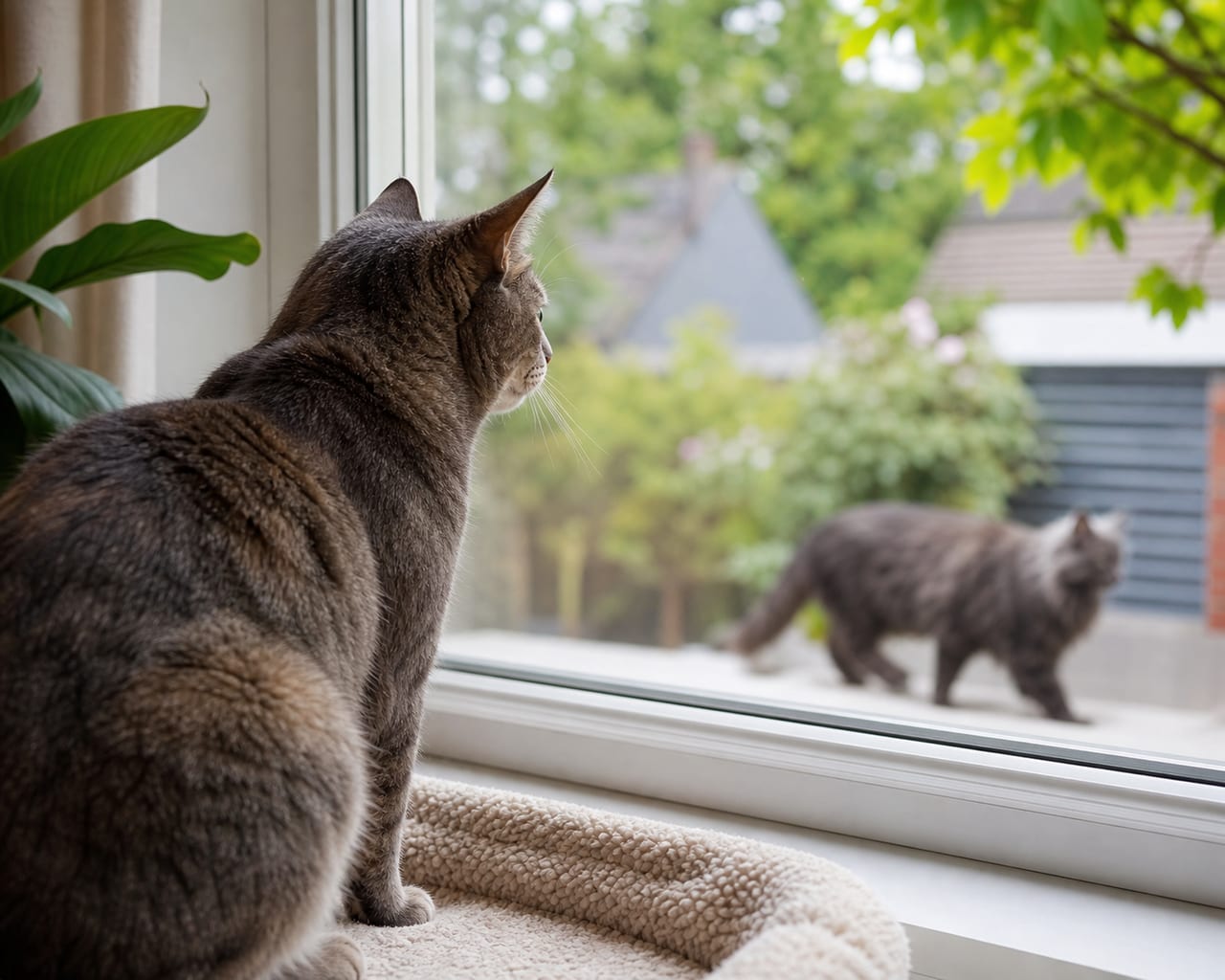
A cat watching another cat outside can stay highly aroused after the other cat disappears. If a person or household pet approaches before that arousal settles, the response may be redirected toward the nearer target. Do not approach the cat or try to check on them up close. Move people and pets away, block the view from a safe distance, and wait for normal posture and routine before contact. If anyone is injured, handle wound care first.

What to look for
The key question is not only what the cat did, but what the cat was watching, hearing, smelling, or blocked from reaching.
What to try first

Right now
Create distance first. Reaching in, grabbing, or carrying can redirect the bite toward you.
Reduce the trigger
Close the blind, add a visual barrier, lower noise, or separate animals without reaching into the conflict.
After calm returns
Look for relaxed movement, normal routine, and disengagement from the trigger before touching or reintroducing.
When to change course
Seek veterinary or qualified behavior help if safety is difficult to manage, incidents repeat, household animals remain in conflict, or the behavior is new and unexplained.
What redirected aggression means
Redirected aggression can look random because the person or pet who gets bitten is not always the original problem. The cat may have been watching, hearing, smelling, or fighting with something else, then arousal spills toward the nearest reachable target.
An outdoor cat, dog, wildlife, delivery noise, or unfamiliar smell can raise arousal while the cat is unable to reach or avoid the source.
A fight, stare-down, blocked route, or resource pressure between animals can leave one cat highly aroused even after the visible conflict stops.
A dropped object, alarm, construction sound, visitor, or sudden movement can shift the cat from watchful to defensive before a person reaches in.
Many injuries happen when someone tries to pick up, comfort, restrain, or move a cat that is still locked on the original trigger.
Real-world patterns
The cat is staring through the window, tail moving hard, pupils wide. A person walks over to pick the cat up or move them away, and the bite lands on the person instead of the outdoor cat.
Two cats have a tense encounter. One cat runs under furniture, the other remains tense. A guardian reaches in to comfort or separate them, and the aroused cat lashes out at the nearest hand or pet.
A loud sound or visitor startles the cat. The person tries to soothe the cat immediately, but the cat has not returned to baseline and reacts defensively.
Immediate safety sequence
The safest response is boring: distance, barriers, quiet, and time. Comforting, grabbing, or scolding during high arousal can put the person directly into the redirected path.
Handle human wound care or veterinary care before analyzing the trigger. Do not continue reintroductions while people or pets are injured.
If no trigger is visible, incidents repeat, or the behavior is escalating, treat this as a veterinary or qualified behavior question.
Prevent repeat incidents
Record time of day, window view, sounds, visitors, outdoor cats, household cat positions, who approached, touched, or tried to lift the cat, and how long it took normal posture and routine to return.
Use window film, blinds, feeding station changes, separate resting paths, scent management, or barriers so the trigger appears less often or at a safer distance.
If another pet was involved, separate first and reintroduce only after calm behavior returns. Do not force immediate apology-style contact.
Repeated redirected aggression, serious injury, or ongoing intercat tension needs veterinary or qualified behavior support.
Redirected-aggression sources
These sources support the arousal, separation, and safety-boundary guidance. Public examples are scenario patterns, not proof of a specific cause in an individual cat.