
This fits if
The situation matches
Your cat mainly targets moving feet, ankles, or legs, often from behind furniture, doorways, or during high-energy times.
Site search
Cat behavior guide
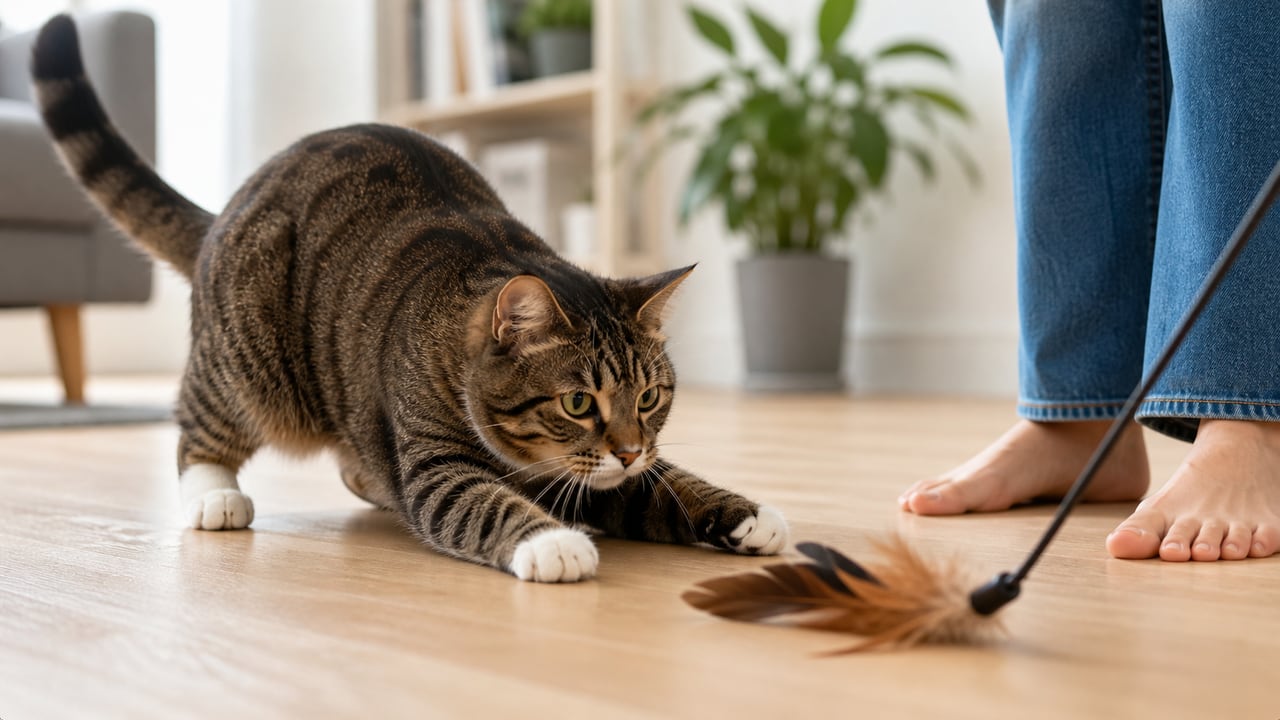
Fast movement can trigger a hunting sequence—watching, stalking, chasing, pouncing, and grabbing—even when the target is a person’s feet.
Start by matching the situation
If the bite broke skin, handle the wound first. If not, check whether this sounds like your situation.
This fits if
Your cat mainly targets moving feet, ankles, or legs, often from behind furniture, doorways, or during high-energy times.
Do first
Stop using feet or hands as play targets. Hold still if it is safe, create distance, then redirect to a toy that moves away from your body.
Then
Add predictable short play sessions before the usual attack window, plus climbing, hiding, searching, and food-puzzle outlets.
Change course if
Use wound care first if skin broke. Use the health route if this is sudden, intense, hard to interrupt, or not tied to movement.
Feet and ankle pattern
Moving feet are the common thread. Walking legs, feet shifting under a blanket, and a familiar dawn, dusk, or pre-meal activity window can all turn into chase practice. Hold still if it is safe and step away slowly as soon as the cat lets go—running, kicking, or waving a foot keeps the game going. Move play onto a wand or roll-away toy before the usual window, and stop letting feet under bedding act as a play cue. If the attacks are sudden, hard to interrupt, or not tied to movement, check the health guide instead.
What to look for
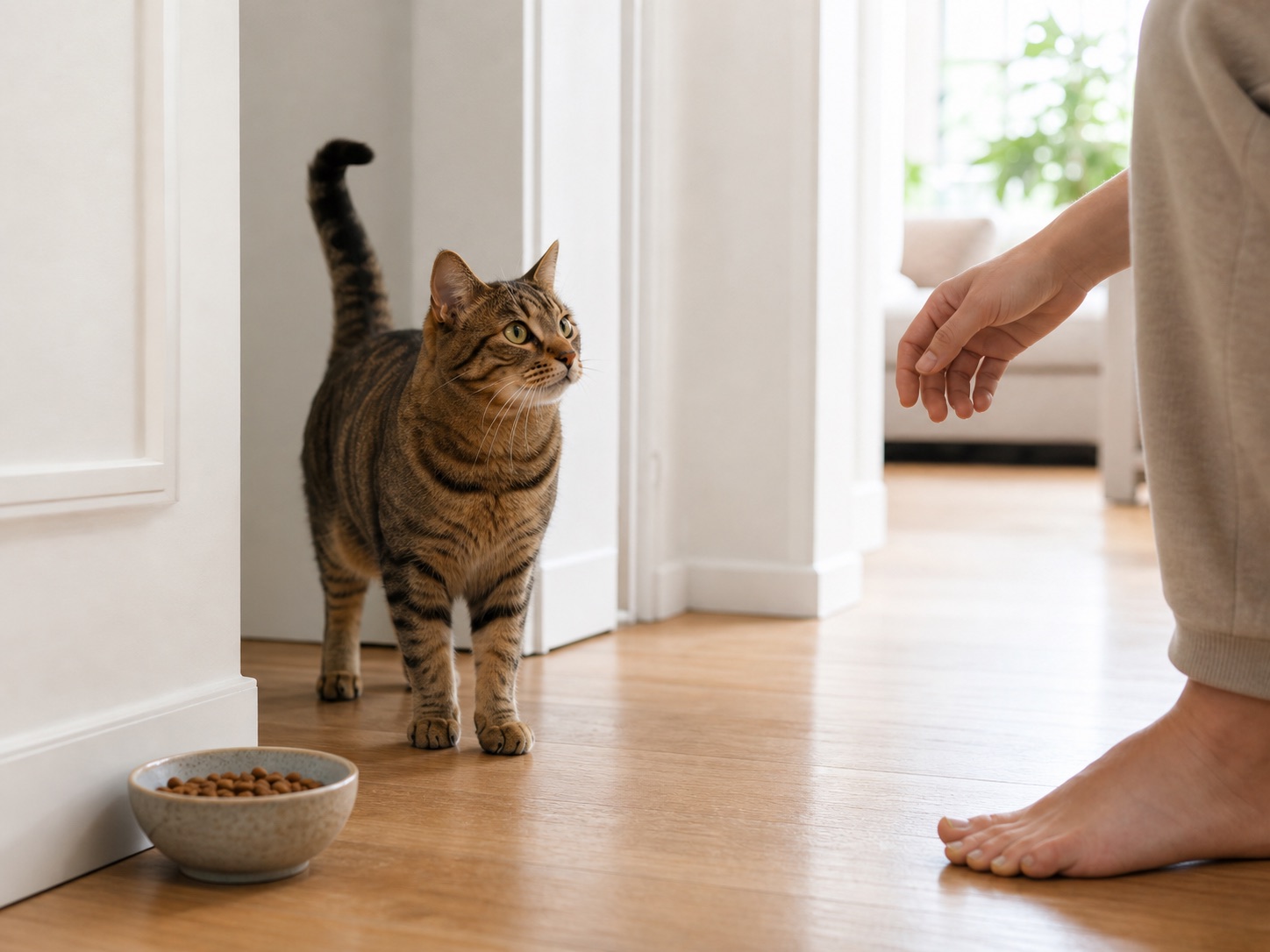
Look at the route, the hiding spot, the moving feet, and whether your cat has a better target than your legs.
What to try first
Before the usual time
Use a wand or tossable toy before the usual pounce window, so the first chase target is not your feet.
During a pounce
Avoid kicking, chasing, or hand wrestling. Make your legs boring and move the toy away from you.
Daily setup
Give the cat places to climb, hide, chase toys, and search for food so energy has a predictable outlet.
When to change course
Seek veterinary or qualified behavior support when attacks are new, intense, difficult to interrupt safely, or paired with other physical or routine changes.
Why it happens
The useful question is not "Is my cat mean?" It is "What did my cat rehearse right before contact?" If the sequence is watching, crouching, chasing, pouncing, grabbing, and resetting, the first fix is usually to redirect the chase and change the timing of play.
Feet disappear around corners, move under blankets, and pass quickly through doorways. That movement can trigger stalking, chasing, pouncing, grabbing, and biting.
Many ankle attacks are quiet and fast rather than defensive. The cat may crouch, watch, pounce, release, and reset because the pattern is closer to play or predatory behavior than a grudge.
Kicking, yelling, running, or waving hands can make the moment more exciting. The goal is to make ankles boring and put the chase into an object that can move away from your body.
If the attacks are new, unusually intense, hard to interrupt, or paired with hiding, appetite change, mobility change, or touch sensitivity, treat it as a health-boundary question first.
Real-world patterns
A cat waits near a doorway or under furniture, then rushes at ankles as the person walks past. The clue is the sequence before contact: watching, crouching, fast chase, grab, then reset.
The attacks cluster around dawn or dusk, before dinner, late at night, or after long quiet periods. The person sees the bite, but the missing piece is often the unused play and hunting energy before it.
Feet moving under blankets become the target. Hold the covered feet still if it is safe, then keep future play on a toy outside the bedding so the target does not keep moving after the pounce.
A better play routine
The routine should happen before the normal attack window, not only after a pounce. Keep the moving target away from your body so your legs stop being part of the game.
Switch to the health route when attacks are new, escalating, not tied to movement, paired with hiding or appetite change, or hard to interrupt safely.
Play-aggression sources
These sources support the play, predatory-sequence, and health-boundary framing. Public examples are scenario patterns, not proof of one cause in an individual cat.