
This fits if
The situation matches
Your kitten targets moving hands, feet, or ankles during active play, and you want a safer routine. If the bite happens mainly during petting, pickup, or fear, use the related route instead of assuming play.
Site search
Kitten behavior guide
Play is a common reason kittens bite hands, feet, and ankles, especially when movement starts a chase. But do not assume every bite is play. End contact, check the skin, and compare the setup before choosing what to change.
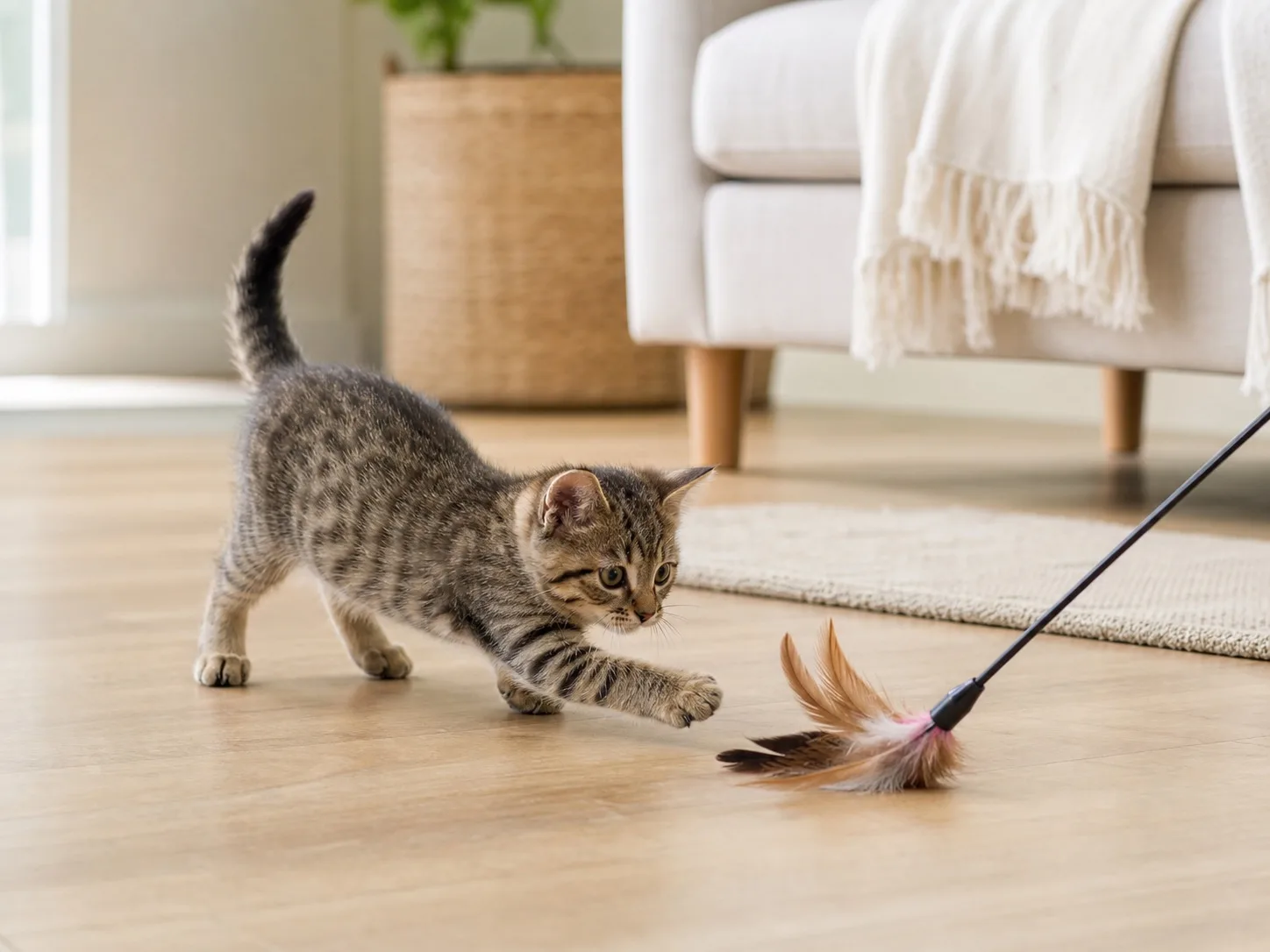
Start by matching the situation
If the bite broke skin, handle the wound first. If not, check whether this sounds like your situation.
This fits if
Your kitten targets moving hands, feet, or ankles during active play, and you want a safer routine. If the bite happens mainly during petting, pickup, or fear, use the related route instead of assuming play.
Do first
If it is safe, hold still until the kitten lets go, then step away and check whether the skin broke. If holding still is not safe, protect yourself and end the interaction without wrestling.
Then
Before the next high-energy period, set up a wand, kicker, or roll-away toy so teeth and claws stay away from skin.
Change course if
Use wound care first if skin broke. Contact a veterinarian if biting is sudden, escalating, touch-specific, or paired with difficulty eating, movement changes, mouth discomfort, or other health changes.
What to look for
Look for the whole sequence: watching, chasing, pouncing, grabbing, releasing, and resetting can make play more plausible. The same bite can also happen during fear, unwanted handling, or discomfort.
What to try first
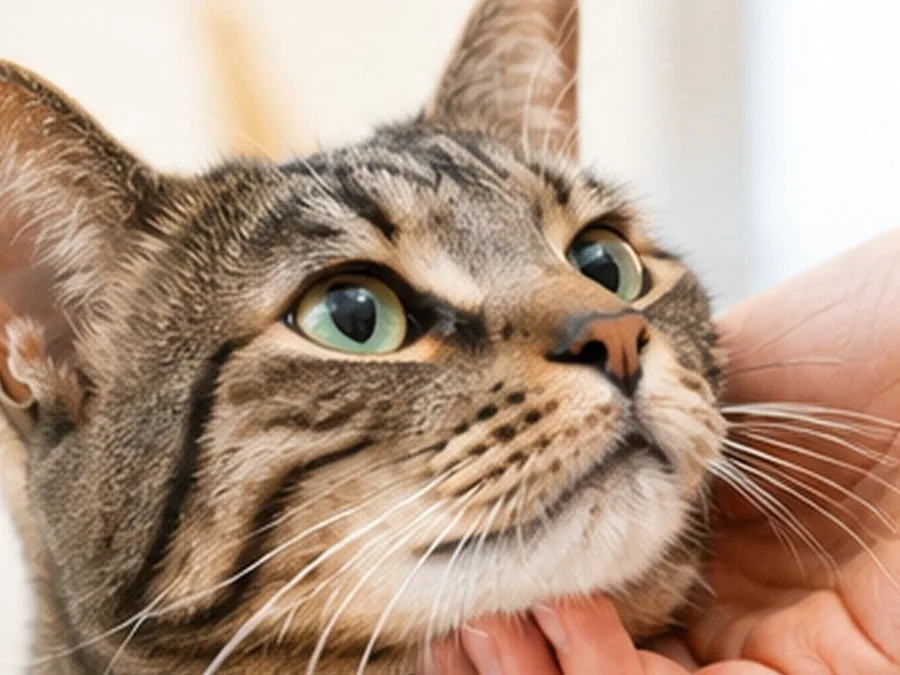
When teeth touch skin
If it is safe, hold still and wait for the kitten to let go, then step away. If holding still is not safe, protect yourself and end the interaction without wrestling. Do not punish or immediately offer a new game.
Before the usual time
Use a wand during supervised play, or roll a toy away from your body. Put string and elastic toys away when the session ends.
Every time
Hands and feet never become toys. Track the usual time and place, then start an appropriate game before the ambush pattern begins.
When to change course
Do not use age alone to explain a bite. Contact a veterinarian when biting is sudden, escalating, linked to one body area, paired with difficulty eating or mouth discomfort, accompanied by other physical changes, or difficult to manage safely.
Why it happens
Start with what happened just before the bite. A moving hand, a high-energy chase, petting, pickup, cornering, and touch to one area are different situations. The useful answer is the one that changes what you do next.
Young cats practice movement patterns used in play and hunting. When the sequence is watch, chase, pounce, grab, release, and reset, play may fit—but the sequence is a clue, not a diagnosis.
Wiggling fingers, hand wrestling, and feet moving under a blanket can teach a kitten that human skin is a play target. A long wand or a toy rolled away from your body creates a safer target.
As adult teeth come in, some kittens chew more. Offer a soft, flexible chew toy under supervision, but use a different route for biting tied to fear, unwanted touch, sudden change, or one painful area.
A bite during pickup, petting, cornering, or touch to one area should not be treated as ordinary play. Stop the interaction, make space, and follow the route that matches the setup.
When will it stop?
Play often changes as kittens mature, but there is no reliable age when every kitten stops biting. The pattern your kitten repeats still matters. Start safer play now; if biting persists, escalates, causes injuries, or happens outside play, ask your veterinarian or a qualified feline behavior professional for advice tailored to your kitten.
VCA notes that adult teeth begin appearing at about 3 months and the back teeth usually come in between 4 and 7 months; chewing can continue for several months afterward. That is a teething timeline, not a deadline for biting to stop.
Real-world patterns
Someone wiggles a hand, pulls it away quickly, or wrestles with the kitten. The kitten tracks it, pounces, grabs, and returns when it moves again. The useful change is to remove hands from play and prepare a target that moves away from the body.
Biting clusters around a doorway, the edge of a bed, or the same high-energy window each day. Record the pattern, then start appropriate play before hands, feet, or ankles become the target.
The kitten bites while being stroked, lifted, held on a lap, or touched in one place. Use the petting or pickup route instead. If the reaction is sudden, fear-linked, or limited to one painful area, check the health boundary. More play is not the answer.
A play plan that works
Prepare the toy before the usual bite window. If play only appears after biting, the bite can become the route to the game. Calmly end contact first, then restart later with distance between teeth and skin.
Use the petting guide or pickup guide when that setup fits. Check the health boundary for sudden escalation, touch sensitivity, difficulty eating, mouth discomfort, or other physical changes.
Kitten-biting sources
These veterinary and feline welfare sources support the play, teething, handling, and health-boundary distinctions. Scenario patterns do not prove one cause in an individual kitten.