
Rear-end grooming guide
Why is my cat not cleaning their butt?
First separate two very different situations: you have not seen the grooming, or the rear is actually dirty, matted, irritated, or difficult to reach. Then check stool, movement, and comfort before trying to clean or “train” the behavior.
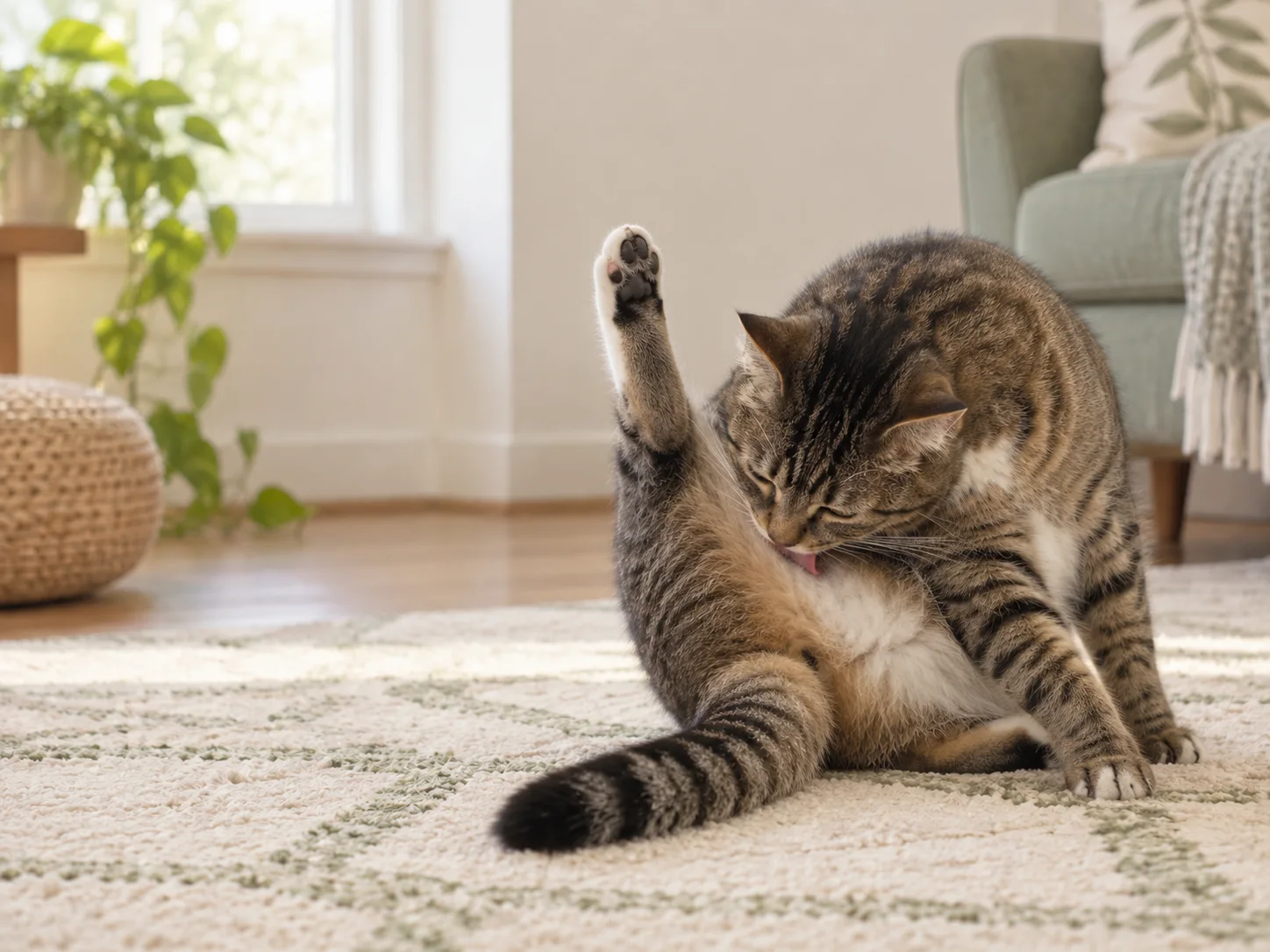
Quick answer
A clean rear and a dirty rear are not the same problem
If the fur and skin look normal and nothing else changed, not witnessing the grooming does not prove your cat has stopped. If stool, odor, dampness, mats, redness, or a wider grooming change is present, check whether the cat can reach comfortably and whether bowel habits or the skin around the rear have changed.
Do not call it laziness
Cats may leave the area dirty because soft stool or long fur keeps re-soiling it, because twisting hurts, or because the area itself is irritated. The visible mess is a clue—not a diagnosis or a behavior problem.
Four paths
Which pattern is closest?
More than one path may apply. If the change is new, painful, worsening, or paired with abnormal stool or straining, use the cautious path first.
You may simply not see the grooming
The fur and skin look normal, there is no odor or stool, and your cat’s movement, litter-box use, and wider grooming routine are unchanged.
Stool or fur is involvedThe mess may be the main problem
Soft stool sticks to the coat, long hair traps debris, or a mat keeps the area from staying clean even when the cat tries to groom.
Weight or stiffness limits reachYour cat may not be able to reach
Excess body weight, arthritis, or other pain can make bending and turning difficult. A wider grooming or movement change strengthens this path.
Pain or irritation signsChange course first
Scooting, repeated licking, straining, odor, blood, swelling, discharge, a wound, or distress during touch deserves veterinary advice.
A two-minute check
Inspect the result, movement, and litter box—not the cat’s motive
Use the least handling possible. The useful evidence is what is on the coat, how the cat moves, and what the stool and litter-box pattern look like.
Check these five things
- Look in good light without forcing the tail upward. Note stool, dampness, redness, swelling, discharge, blood, a wound, a mat, or protruding tissue.
- Watch one normal turn or grooming attempt. Does the spine and hip movement look smooth, or does the cat stop, brace, or avoid one side?
- Check the litter box and the next stool. Record whether it is formed, unusually soft, very dry, absent, or paired with straining.
- Compare the rest of the coat. A wider drop in grooming is more informative than one body area alone.
- Note what changed recently: age, weight, appetite, activity, jumping, medication, diet, vomiting, diarrhea, or litter-box routine.
Pattern 1
Soft stool or long fur keeps the rear dirty
A cat may groom normally and still have stool caught in long coat. Repeated smearing, diarrhea, very dry stool, constipation, or straining points beyond coat care and toward the bowel pattern.
One isolated piece of debris after an otherwise normal bowel movement is different from repeated soiling. Photograph the stool or note its consistency and frequency before cleaning the box.
When coat length is the main obstacle
Ask a veterinarian or cat-experienced groomer whether a small hygiene trim would reduce trapping. Do not use scissors against a mat or skin fold.
When stool has changed
Contact your veterinarian for persistent or recurring diarrhea, constipation, straining, blood, vomiting, poor appetite, lethargy, pain, or dehydration. Do not give an over-the-counter anti-diarrhea or laxative product unless directed.
Pattern 2
Excess body weight or pain may make the rear impossible to reach
An overweight cat may physically struggle to bend far enough to clean the rear. Extra weight can also add load to painful joints, while joint, spinal, or other pain can make twisting and balancing uncomfortable. Look for a cluster: a rounder body shape, recent weight gain, stiffness after rest, lower jumps, hesitation on stairs, changed sleeping positions, less play, or a wider decline in coat care.
Cats often hide pain. A cat does not need to limp or cry for mobility to have changed.
Make access easier while you arrange advice
Keep litter boxes easy to enter, place essentials on the same level, and avoid forcing high jumps. Ask your veterinarian to assess both mobility and body condition; do not sharply restrict food or improvise a crash diet. Cats need gradual, individually planned weight loss.
Look at the whole grooming pattern
Greasy, clumped, or matted fur over the back and hips can support the observation that reaching has become difficult. It still does not identify the cause by itself.
Small cleanup
Use warm water, a soft cloth, and the shortest safe session
Cleaning can remove surface debris, but it does not solve recurring diarrhea, constipation, painful movement, skin irritation, or a mat pulling at the skin.
For a small amount of debris
- Use a soft cloth dampened with warm water for a small amount of surface debris.
- Let the cat stand in a stable position and keep the session brief. Stop if they tense, cry, struggle, or try to bite.
- Pat the fur dry instead of rubbing the skin repeatedly.
- For long hair, recurring mats, or debris close to the skin, ask a veterinarian or cat-experienced groomer for a safe hygiene trim.
- Wash your hands afterward and clean any soiled bedding or litter around the same time.
Stop if handling becomes unsafe
Painful cats may bite or scratch. Do not pin, scruff, chase, or continue after distress. If you need help moving or examining the cat, call the clinic first for handling advice.
What not to do
Avoid shortcuts that hide the cause or irritate the skin
The goal is not to make the coat look clean for one hour. It is to remove a small mess safely and notice why it happened.
Avoid these shortcuts
- Do not assume the cat is lazy or refusing to be clean.
- Do not use scented, disinfecting, baby, alcohol, essential-oil, or medicated wipes unless your veterinarian confirms the exact product is safe for this cat.
- Do not apply human creams, powders, pain medicines, or anti-diarrhea products.
- Do not cut a mat with scissors close to the skin; thin cat skin can be pulled into the mat and cut.
- Do not force a bath or prolonged restraint when the cat is painful or frightened.
- Do not change food, add fiber, or start supplements solely from an online checklist.
When to change course
Actual soiling plus pain, irritation, or bowel changes needs more than grooming help
Arrange veterinary advice when the change is sudden, persistent, recurring, or paired with stiffness, reduced jumping, weight change, diarrhea, constipation, straining, scooting, repeated licking, odor, redness, swelling, discharge, blood, a wound, poor appetite, vomiting, or lethargy. Seek prompt or urgent veterinary help for protruding tissue, severe pain, repeated unproductive straining, marked weakness, or acute distress. Repeated litter-box straining can also be mistaken for constipation when a cat is unable to pass urine, which is an emergency.
Before the appointment
Record facts that separate coat, stool, and movement
A short record helps the clinic see whether the problem starts with repeated soiling, reduced reach, or irritation around the rear. It should never delay care when the cat is painful or unwell.
Write down
- whether the rear was actually soiled, and with stool, urine, discharge, or an unknown substance;
- stool appearance and frequency, plus any straining or repeated box visits;
- how the cat turns, jumps, climbs, and settles before and after grooming;
- whether grooming changed only at the rear or across the whole coat;
- scooting, odor, swelling, redness, blood, licking, biting, or sensitivity to touch;
- a clear photo of the coat or a short video of the movement, if recording does not add stress.
Frequently asked questions
Short answers about rear-end grooming
Is it normal if I never see my cat clean their butt?
Not seeing the behavior is different from finding a dirty or irritated rear. If the fur and skin look normal and your cat’s movement, stool, litter-box use, and wider grooming routine are unchanged, observe rather than forcing an inspection. A new grooming change or actual soiling deserves a closer check.
How can I clean my cat’s dirty butt safely?
For a small amount of surface debris, use a soft cloth dampened with warm water, keep the cat in a stable position, and stop if the cat appears painful or distressed. Repeated soiling, skin irritation, large mats, or debris close to the skin needs veterinary or professional grooming help.
Can a cat be too overweight to clean their butt?
Extra body weight can make turning and reaching harder, but body condition should be assessed with a veterinarian rather than guessed from appearance alone. Ask for an individual weight plan instead of sharply reducing food or adding exercise without guidance.
Can arthritis stop a cat from grooming their rear?
Joint or spinal pain can make twisting, balancing, and reaching uncomfortable. Stiffness, reduced jumping, changed resting positions, hesitation on stairs, or less grooming elsewhere strengthens the case for a veterinary mobility assessment.
Does scooting mean my cat has an anal gland problem?
Scooting can occur with irritation around the rear, and anal sac disease is possible, but it is less common in cats than in dogs and cannot be confirmed from scooting alone. Odor, swelling, discharge, pain, licking, or difficulty defecating should be assessed by a veterinarian.
The useful next step
Name what changed before choosing the fix
If the rear is clean and the rest of the cat is unchanged, observe. If stool or long fur repeatedly causes soiling, document the bowel pattern and ask about safe coat management. If turning looks difficult or the area looks painful, arrange veterinary assessment instead of repeating cleanup.
Grooming, mobility, and digestive-health sources
Guidance used for this page
These sources support the grooming, mobility, stool, and veterinary-care boundaries in this guide. They cannot identify the cause for an individual cat.